- 6/13/2024
-

Why engine is overheating?
When a car becomes old or poorly inspected, it will develop some issues, and one of the most common of these issues is engine overheating, where the engine can overheat due to several things such as a lack of coolant, coolant leakage from the radiator, hoses, or water pump, which leads to a malfunction in the engine's cooling process.
A damaged thermostat or thermostat can prevent the coolant from circulating properly inside the engine, while a broken water pump can completely stop the flow of coolant from the engine, so most of the reasons that lead to engine overheating are related to the cooling system consisting of many parts, so we advise you to perform regular maintenance and immediate repairs to all your car's systems to prevent these issues from occurring and ensure that the cooling system is working properly.
Motorgy provides you with used cars for sale in Kuwait inspected by experts with a comprehensive inspection report for more than 70 parts of the car to ensure that you buy the car you want without any issues and at the best market price with the guarantee of the sales experts as well.
How do I know if my engine is overheating?
If you want to know the most important symptoms that accompany engine overheating, they are as follows:
Engine overheating warning
Every car has a warning sign that appears in the dashboard in front of the driver when the engine temperature rises above the normal limit, and you must act quickly before a bigger issue occurs, and the engine fails, and you can know that the engine temperature is high by looking at the thermometer in the dashboard, if it rises above the normal limit, which is often slightly below the middle or above the red line, it means that your engine has an issue that requires immediate treatment.
Reduced engine power
When the engine temperature rises, this may lead to a noticeable decrease in its power; due to the expansion of the pistons inside the cylinder bore, which leads to slow rotation of the crankshaft, and the engine will not be able to generate the power it generates when its temperature is normal, and here you must immediately look at the temperature gauge and see the limit reached by the indicator or the instrument panel may appear in front of you the engine overheating light.
The engine is knocking
The car engine is cooled through the cooling system, in addition to the oil known as engine oil, and if the engine temperature rises too much, the oil will burn and evaporate and lose its ability to cool and lubricate the moving parts of the engine and its temperature will rise and it will emit crackling sounds with heavy vibrations sometimes when the temperature rises too much.
Heat odor
The car engine contains many parts made of metal, rubber and plastic, and all of these parts are heat-resistant, but if the engine heats up a lot, especially on hot summer days, these parts produce a smell that indicates that the heat is high and is called the smell of heat, which also comes from some oils collected outside the engine, and you can smell this smell from outside the car or through its flow through the air vents of the air conditioning system.
Coled air from the heating system
When you turn on the heating system in your car, the air that will come out of the air vents is cold air, but if there is a shortage of coolant, the heat of the liquid will not be enough to warm up the heating system and pump hot air, but the air will come out cold or not very hot, and this issue may occur due to damage to the thermostat as well.
Coolant leaking on the floor
If you notice coolant on the ground under your car after it has been parked for a while, this may be an indication that the engine is overheating, because this may be due to a leak in the cooling system leading to overheating of the engine or boiling of the coolant inside the system, especially in the reserve tank that is under the hood.
Vapor coming out of the radiator cap
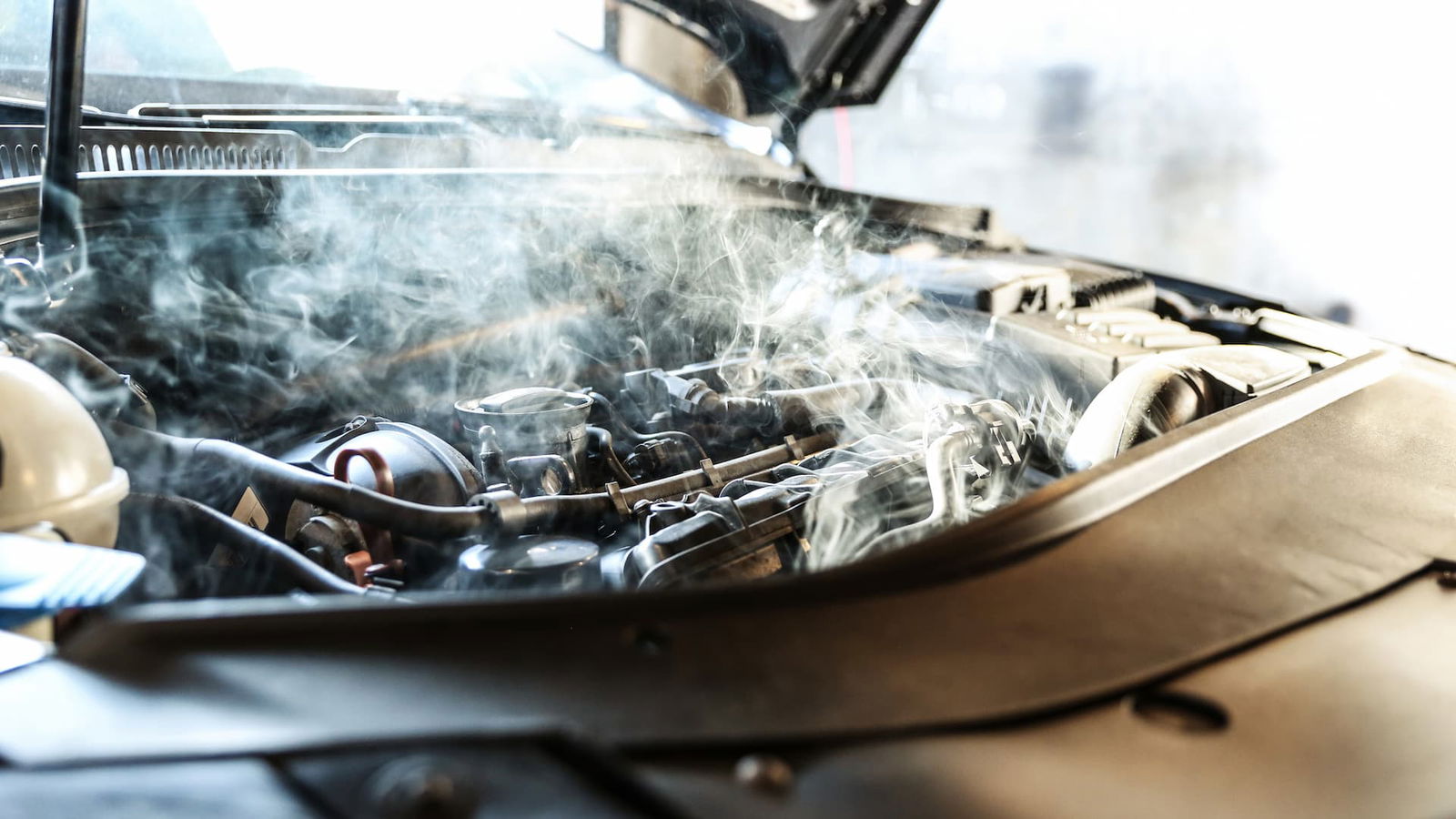
When the coolant boils in the tank or inside the radiator, the vapor formed inside comes out of the radiator cover in the form of steam due to extreme pressure, or it may come out from another weak place in the system, or it may cause one of the hoses to burst, and thick steam comes out of it, and be sure that when the coolant in your car starts to boil, the engine temperature is high, and you must act immediately before any part of the cooling system or even the water dishes in the engine explodes.